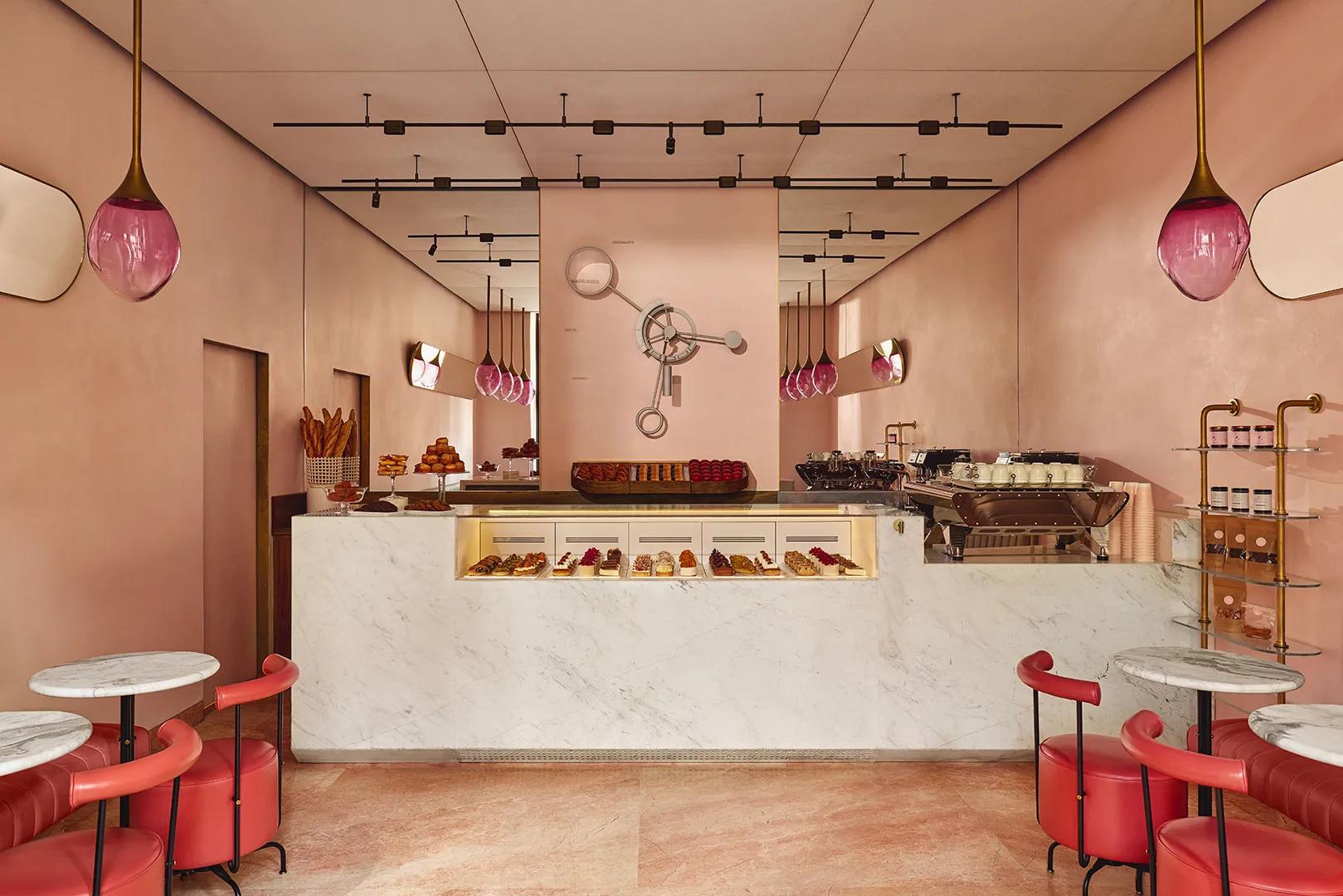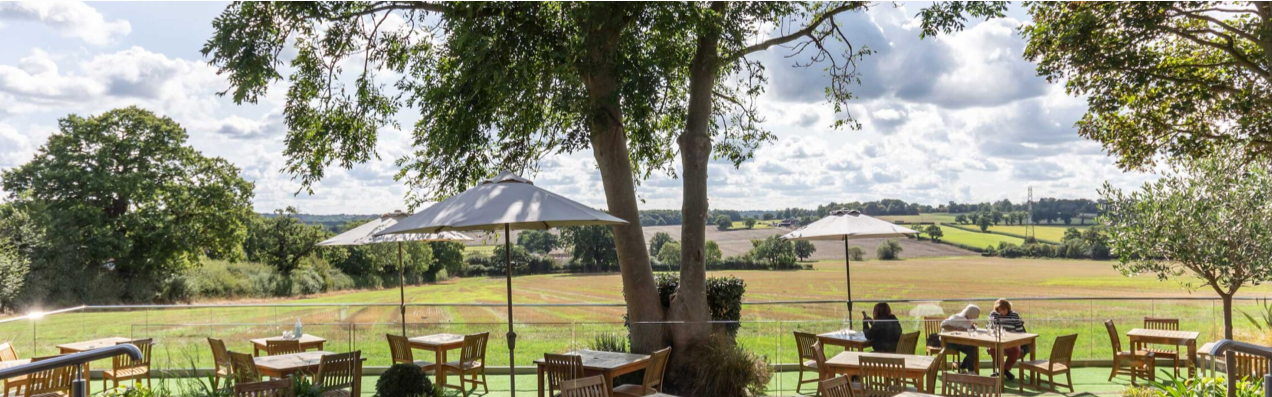
On 18 April 2026, the V&A opened a brand new museum on Queen Elizabeth Olympic Park in Stratford. V&A East is five storeys on the old London 2012 site, free to walk into, with two permanent "Why We Make" galleries and a first big show on 125 years of Black British music.
The café on the ground floor is Café Jikoni, run by the team behind Jikoni in Marylebone. Chef Ravinder Bhogal is known for "no borders" cooking that mixes British, East African, Middle Eastern and Asian food. At launch the menu had a Bombay sandwich with green chutney, a prawn toast Scotch egg, a turmeric and ginger chicken pie, lamb sausage rolls with baharat and miso-cream banana bread.
"What has been interesting for us is how you bring true hospitality to a public institution and make it feel fresh," Bhogal told Monocle.
All of it is made on site. "Everything, from our bread and pickles to dessert, is made in house from scratch," she said. For a museum café selling food to go, that means every pack in the fridge needs a full Natasha's Law label, written by the café itself.
Two services, one set of rules
Café Jikoni at V&A East runs sit-down plates and a grab-and-go range side by side. Some visitors stay for lunch. Plenty more grab a sandwich or a pie and keep walking through the galleries.
The grab-and-go side is the tricky one. There's no supplier label to copy, because the café makes everything. The recipes have a lot going on: chutneys, pickles, spice mixes and sauces, each with its own ingredients and allergens. The menu changes. And the team is new, in a building that only opened this spring.
Why Natasha's Law applies
The rules are about PPDS, short for prepacked for direct sale. The FSA defines it as "food that is packaged at the same place it is offered or sold to consumers and is in this packaging before it is ordered or selected" (FSA: Introduction to allergen labelling for PPDS food). The FSA says these rules are "also known as Natasha's Law". They've applied across the UK since 1 October 2021.
The FSA's own example could have been written about this fridge: "Sandwiches and bakery products which are packed on site before a consumer selects or orders them."
So at Café Jikoni, anything made in house and packed before a visitor picks it up is PPDS and needs a full label. Sit-down plates, and anything wrapped after the order, aren't PPDS. They still need allergen information, just not this label.
A PPDS label has to show:
- the name of the food
- a full ingredients list, including what goes into the chutney or the sauce
- any of the 14 allergens emphasised within that list, in bold, capitals, a contrasting colour or underlined
The FSA lists the 14 allergens as celery, cereals containing gluten, crustaceans, eggs, fish, lupin, milk, molluscs, mustard, peanuts, sesame, soybeans, sulphur dioxide and sulphites, and tree nuts.
Other labelling rules still apply on top. Get allergen labelling wrong and you're looking at an improvement notice or criminal prosecution, and the FSA's technical guidance refers to a "potentially unlimited fine". Our guide to what PPDS means goes through it in more detail.
A label for a Jikoni-style sandwich would look something like this:
Bombay Sandwich with Green Chutney
Ingredients: White bread (WHEAT flour, water, yeast, salt), potato, cucumber, tomato, red onion, Cheddar cheese (MILK), butter (MILK), green chutney (coriander, mint, green chilli, lemon juice, salt), ground cumin, black pepper.
Made: 09/10 · Use by: 10/10 · By: RK
(We made this one up to show the format. It isn't Café Jikoni's recipe.)
The name and the ingredients with allergens in bold are what the law asks for. The dates and initials aren't required, but they're worth printing, and they turn out to be useful.
How they print labels
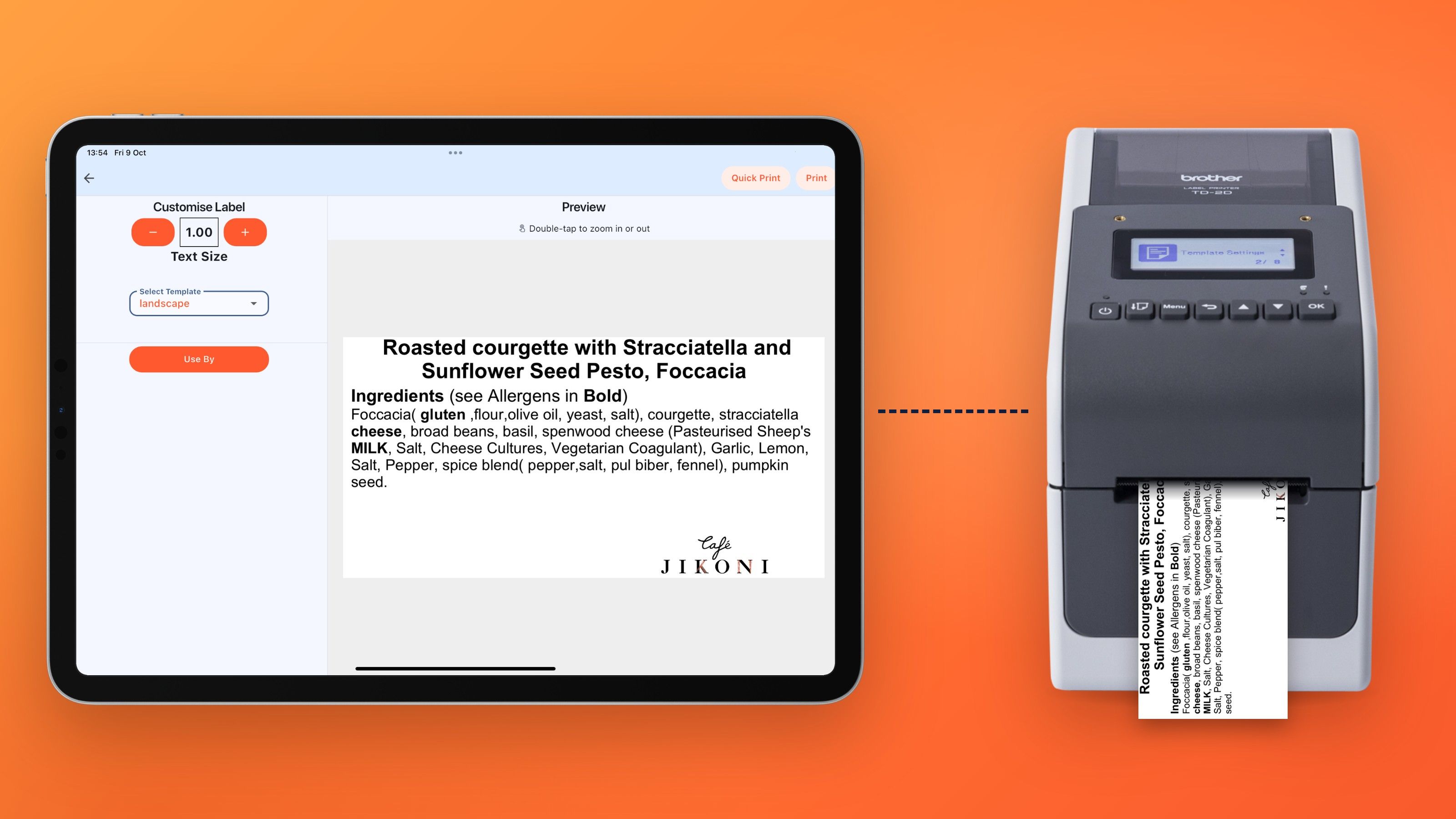
Café Jikoni uses Dill for its PPDS labelling. Each item's ingredients, allergens and shelf life are saved once in Dill. When someone packs a sandwich, they tap it in the Dill app on a tablet or phone (it runs on iOS and Android) and the label prints with the full ingredients, allergens in bold, the dates and who made it.
When a recipe changes, say a new chutney or a different bun, the manager updates it in Dill and every label after that is right. Nobody types an ingredients list at the counter.
The labels print on Brother label printers. In a big public building that also means the printers and devices need a steady connection, which is where DTE comes in.
What the manager says
"I've been using Dill's labelling software for the past two months and it's made our operation so much more efficient and easier when it comes to PPDS labelling our products. The staff find printing labels very easy, as the app isn't complicated. As a manager, I find it really easy to keep on top of product inventory, both traceability and quantities, through the information printed on each day's labels."
- Akshay Samudre, Manager, Jikoni Café, V&A Stratford
Akshay sent us that in the café's first months. The bit we like most is the last line. The team prints labels because the law says so, but each one also records what was made, when and by whom. Look at a day's labels and you can see what went out and how much. He gets traceability and stock counts out of something the team was doing anyway.
The other part is "the app isn't complicated". In a new venue with new starters, staff shouldn't need to know food law to print a correct label. They pick the item and print.
Working with DTE
DTE (Dynamic Technologies Europe) is Dill's networking partner. In DTE's words, it brings enterprise Wi-Fi and networking expertise that ensures mobile computers, barcode scanners and label printers remain reliably connected. That covers wireless survey, design and optimisation, plus product supply and support.
Large public buildings are hard on Wi-Fi: thick walls, open floors and lots of visitors' phones. On a project like this, DTE's job is to keep the printers and devices connected. Ours is to make sure what comes out of the printer is right.
If you run a museum or venue café
Cafés in museums, galleries, theatres and attractions deal with the same things Café Jikoni does. A few things that help:
- Go through the menu and mark what's PPDS. If you make it and pack it before a visitor picks it up, it is.
- Write full recipes, sub-recipes included. Chutneys, dressings, pickles and spice mixes carry allergens too.
- Pick one way to emphasise the 14 allergens and stick to it. Bold capitals are easy to read and easy to check.
- Make printing quicker than packing. If it isn't, labels get skipped on a busy day.
- Change recipes in one place, so the labels follow.
- Print dates and initials on every label. It costs nothing and gives you a daily record.
- Check the Wi-Fi where you print, before you open, not after.
Try it with your menu
Dill prints prep and rotation, grab-and-go and made-to-order labels from one app, and pulls products in from POS and EPOS data so nobody retypes them. It's used by hundreds of businesses across thousands of sites, with over 65 million labels printed. See how our Natasha's Law and PPDS labelling works, or book a demo.
FAQ
Does Natasha's Law apply to museum cafés?
Yes, if the café sells PPDS food. Anything it makes and packs on site before visitors choose it needs a PPDS label.
What is prepacked for direct sale food?
Food packed by the business selling it, where it's sold, before the customer orders or picks it. Grab-and-go sandwiches packed in the morning are the classic example.
Does sit-down food need a PPDS label?
No. Food served on a plate, or packed after the customer orders, isn't PPDS. You still have to give allergen information, for example on a menu or allergen matrix or when asked.
What has to be on a PPDS label?
The name of the food and a full ingredients list with the 14 allergens emphasised. Dates and initials aren't required, but they're good practice.
How does Dill print PPDS labels?
Staff pick the item in the Dill app on a tablet or phone, and the label prints with full ingredients, allergens emphasised, dates and who made it.
What does DTE do?
DTE provides enterprise Wi-Fi and networking so mobile computers, barcode scanners and label printers stay connected, including wireless surveys, design, optimisation, product supply and support.