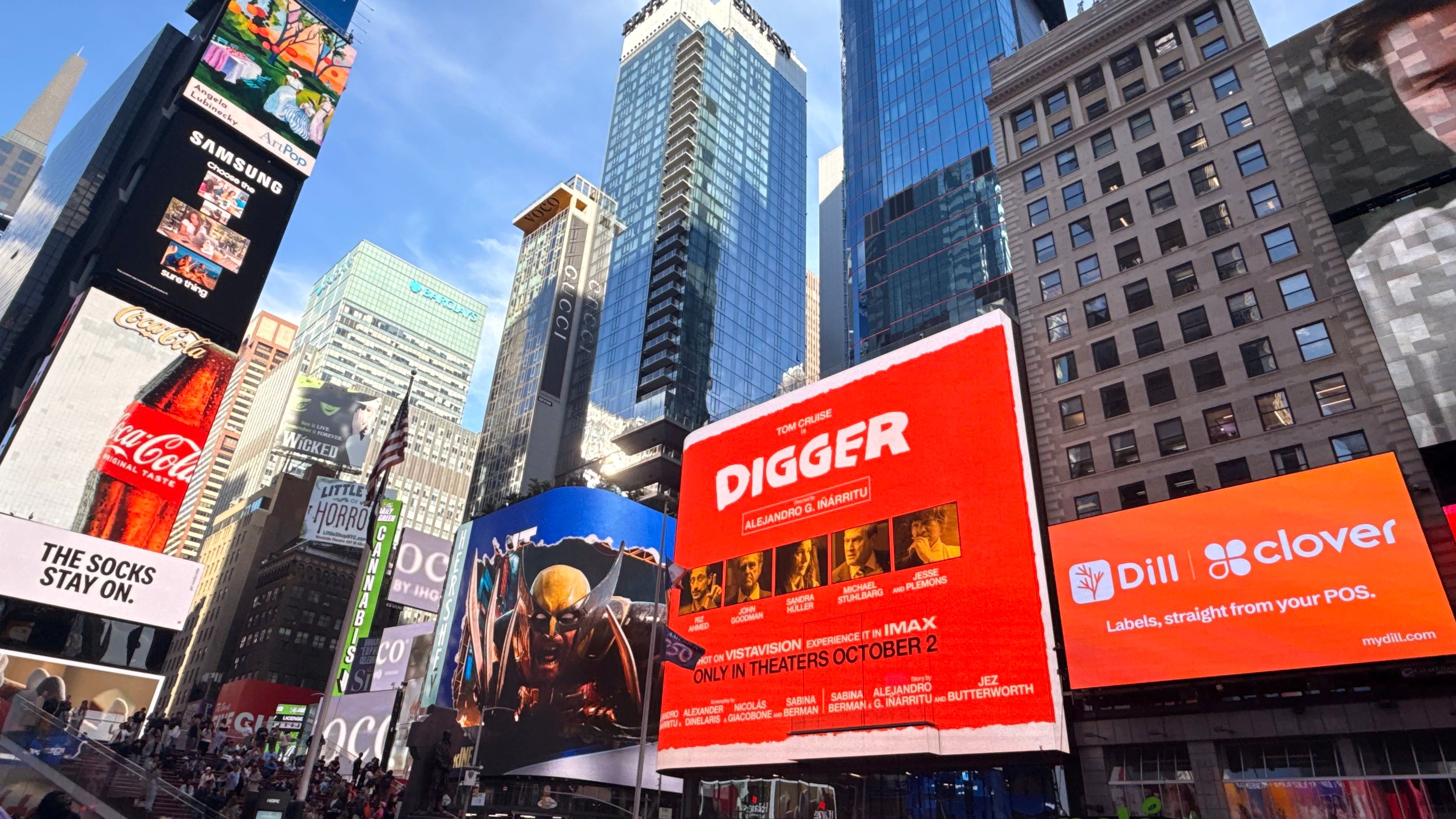
In late September, a billboard in Times Square said two things. The first: "Labels, straight from your POS." The second: "New York's allergen labeling law Nov 12." Underneath both, two logos: Dill and Clover.
That was our Dill x Clover billboard, and the timing behind it is simple. Natasha's Law has been in force in the UK for five years. New York's version starts on 12 November 2026. And Dill is now on the Clover App Market in North America, bringing label printing to one of the most common POS systems in the US: allergen labels printed straight from the products already on the till.
This post covers what that means, what New York is about to go through that UK kitchens already have, and what it means for you if you run a UK food business.
Dill on Clover in 60 seconds
- Dill is now listed on the Clover App Market in North America as "Dill Print by Dill".
- It pulls your products from Clover and prints allergen, prep and rotation labels on supported Brother printers.
- On that market, plans start at $29/month (Dill Core).
- New York's allergen labelling law takes effect on 12/11/2026. It is similar to PPDS, but only covers allergens, and uses 9 major allergens rather than the UK's 14.
- Natasha's Law has been in force since 01/10/2021. The lessons from those five years apply directly to New York.
- In the UK, Dill already connects to EposNow, CyBake, PosHub and Lightspeed, so you can print labels from your till today.
- If you run on Clover in the UK, talk to us.
Who is Clover
Clover is the point of sale system from Fiserv, the US payments group. Around 900,000 businesses run on it (Fiserv, May 2026). You'll find it in restaurants, cafés, bakeries, delis and retail shops, on countertop stations, compact terminals and handheld devices staff carry around the floor.
Clover is mostly known as a US brand, but it's also sold in the UK, with its own UK site and pricing in pounds.
Like most modern POS systems, Clover has an app market where businesses add tools on top of their till. That's where Dill now sits. Clover runs separate app markets by region: one for the US and Canada, one for Europe (including the UK and Ireland), and one for Latin America. Dill's listing is on the North American one.
What label printing on Clover looks like with Dill
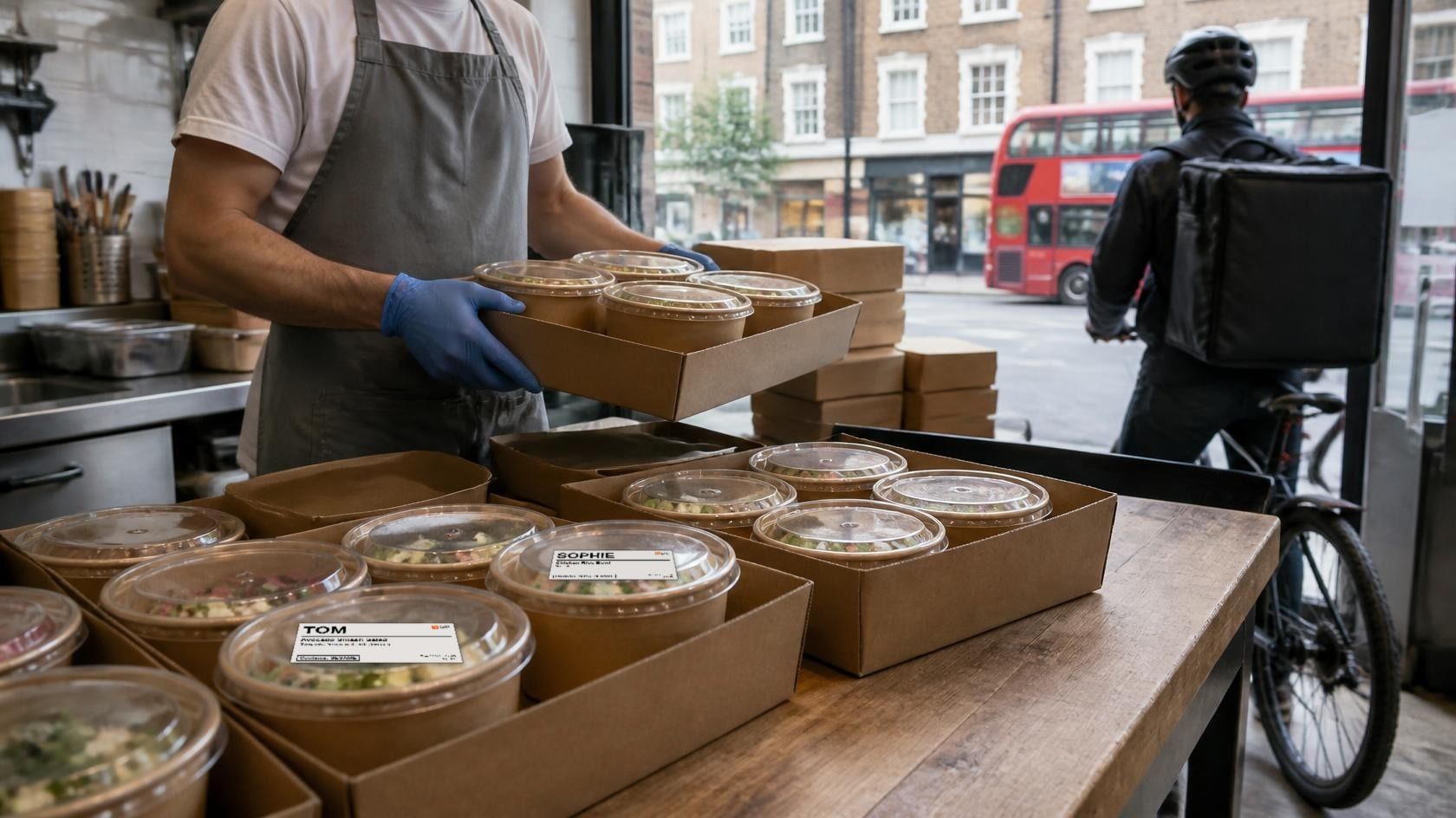
Your Clover account already holds your product list. Dill pulls those products in, you add recipes, ingredients, allergens and shelf lives once, and from then on staff pick an item and the label prints.
On the Clover listing, Dill Print covers:
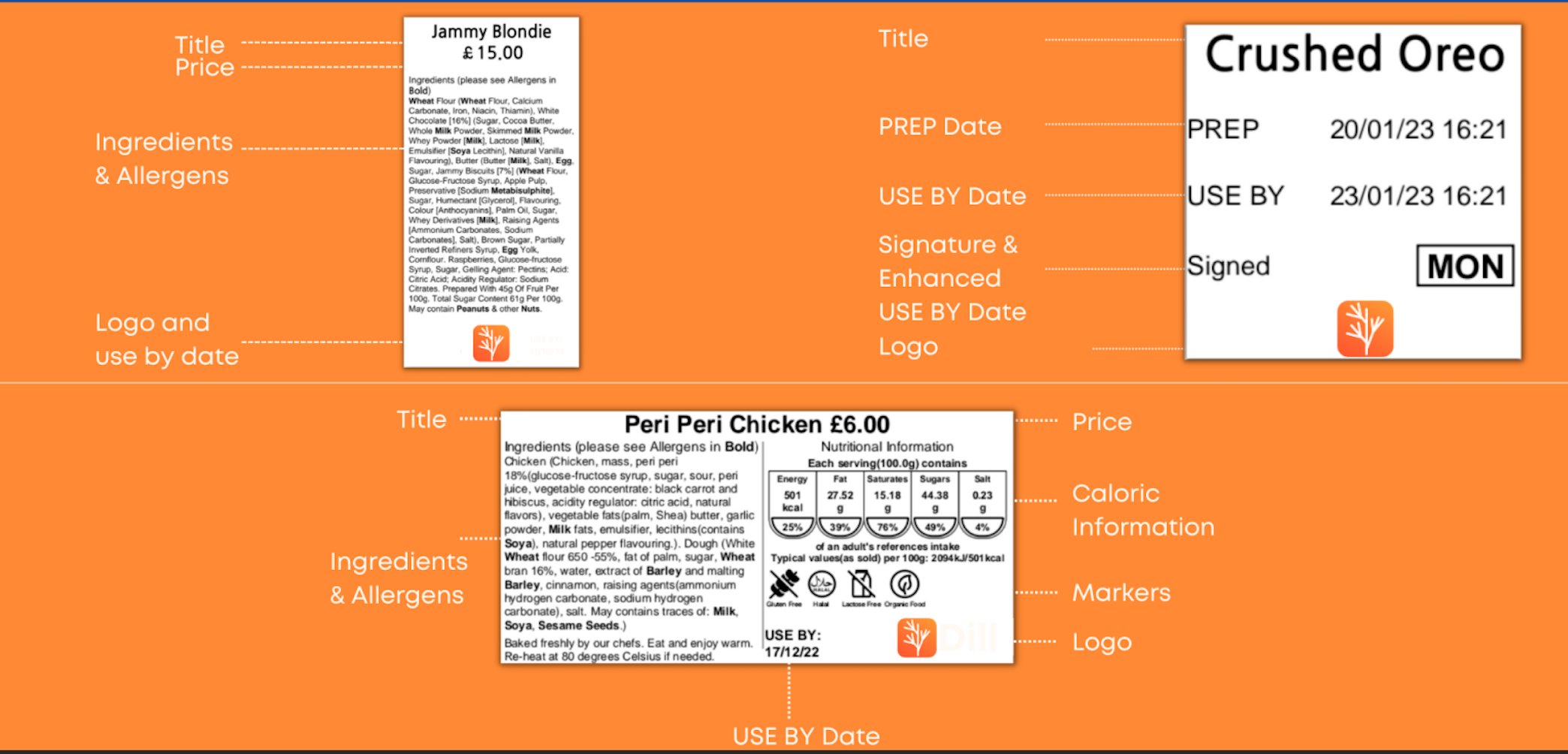
- Food to go labels with ingredients and allergens, for grab-and-go items packed in advance
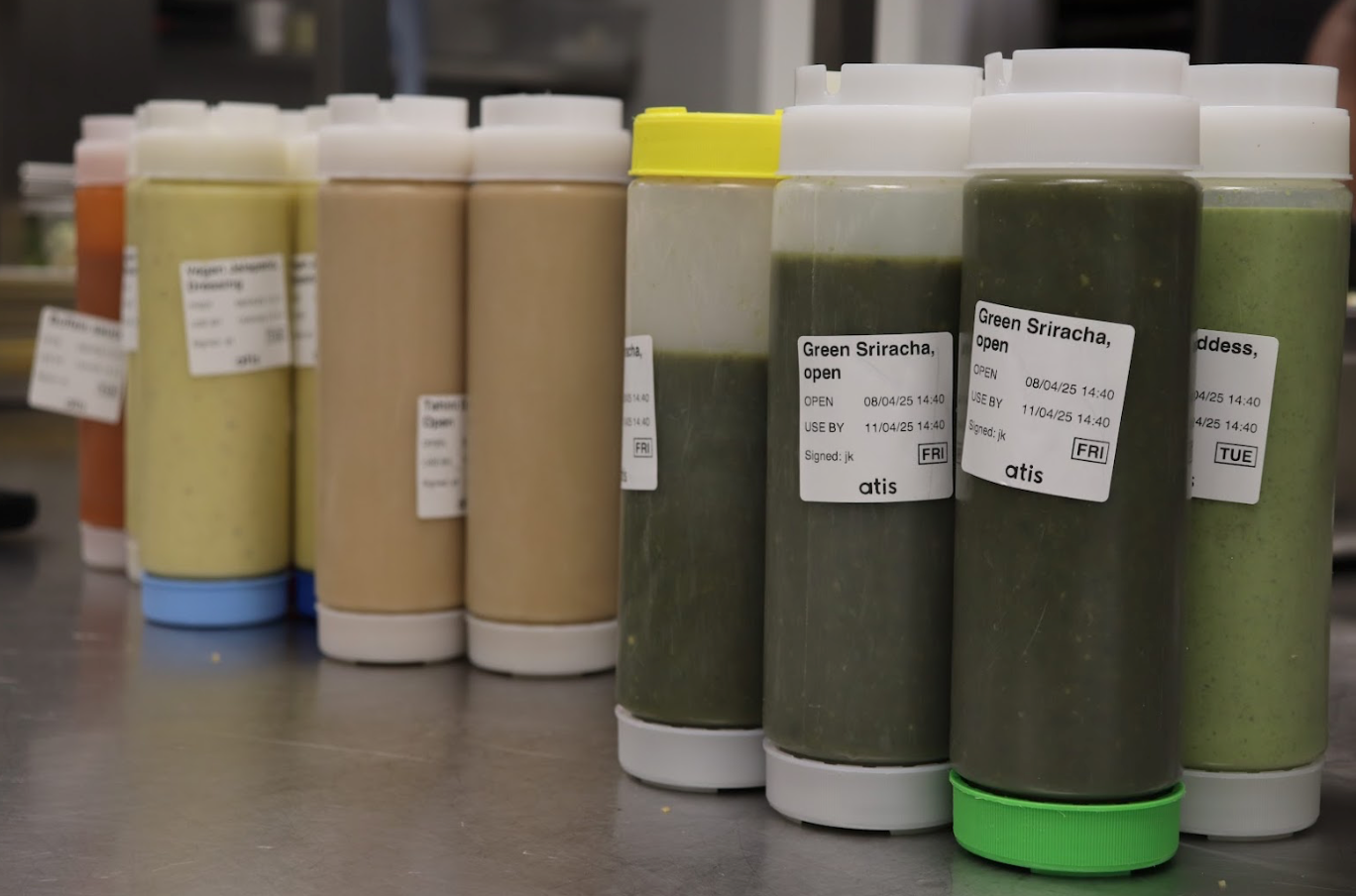
- Prep and rotation labels with use-by dates, for food prepared in the kitchen
- Shared templates, so every site prints the same label
- Custom logos, styles and barcodes
- Shelf-edge labels for retail, kept in sync with Clover prices
Product data stays synced because it comes from Clover, not from someone retyping it into a separate system. Change an item in one place, and the label follows.
The Clover app works with specific printers. The listing names these models: Brother TD-4550DNWB, TD-2350DSA, TD-2350D, TD-2135NWB, TD-2125NWB and RJ-3250WB. It runs on a range of Clover devices, including Flex, Mini, Station Solo and Station Duo.
The till knows what you sell, so the label printer should too.
Why New York, and why now
New York has passed a law that will feel very familiar to anyone who lived through October 2021 in the UK.
Signed on 12/11/2025 and taking effect on 12/11/2026, the law (Public Health Law §1357 and a matching section in the Agriculture and Markets Law) requires food establishments to label prepackaged food with any major food allergens it contains. You can read the section itself on the New York State Senate site.
In UK terms, here's how it compares:
- What's covered. "Prepackaged food" means food prepared, prepacked and sold on the same premises. Food packaged after a customer orders is excluded. That is very close to the UK's definition of PPDS (prepacked for direct sale).
- Who it applies to. The law names delis, bakeries, sandwich shops, ice cream parlours, cafeterias and food trucks, plus retail food stores.
- What the label needs. Only the major allergens. There's no requirement for a full ingredients list, which the UK does require.
- Which allergens. 9 in the US: milk, eggs, fish, crustacean shellfish, tree nuts, wheat, peanuts, sesame and soybeans. The UK has 14.
- Format. The law doesn't set a font size, layout or wording.
Advocates have described it as the first state law of its kind in the US. As of 13/10/2026, we haven't found published guidance from New York's state or city agencies on how it will be enforced. That could change before November.
So: a big city, lots of delis and grab-and-go counters, a deadline weeks away, and a POS system plenty of those businesses already use. That's why the billboard went up where it did.
What New York can learn from Natasha's Law
Here's what five years of UK food to go allergen labelling has taught us. This is our experience working with operators, not legal guidance.
- The label is only as good as the recipe data behind it. Most mistakes don't happen at the printer. They happen when a recipe in someone's head doesn't match the recipe on file.
- Supplier swaps are where allergens sneak in. A different bread, a different mayo, a different spice mix. If the change doesn't reach the label the same day, the label is wrong.
- Handwritten labels don't survive a lunch rush. They work for a week, then shortcuts start. Printing from a picked item is faster and harder to get wrong.
- One change should reach every site. If you run more than one location, updating each site by hand is how two shops end up selling the same sandwich with different labels.
- Know what's made to order. In the UK, food made to order isn't PPDS. In New York, food packaged after the customer orders is excluded too. Staff need to know which side of that line each item sits on.
- Make it quicker than not doing it. If printing a label takes longer than writing one, people will write one.
None of this is unique to New York. It's the same list we'd give a new sandwich shop in Manchester.
Two labels, side by side
Here's what the difference looks like on an actual label. Both are illustrative, with simple ingredient names, not real products.
A UK PPDS label (food to go allergen labelling under Natasha's Law):
Cheese and Pickle Sandwich
Ingredients: Bread (fortified wheat flour (wheat flour, calcium carbonate, iron, niacin, thiamin), water, yeast, salt, rapeseed oil), Mature Cheddar cheese (milk), pickle (vegetables (carrot, swede, onion, cauliflower), sugar, spirit vinegar, salt), mayonnaise (rapeseed oil, water, pasteurised free range egg yolk, spirit vinegar, salt, mustard flour).
For allergens, see ingredients in bold.
Made: 14/10 Use by: 15/10
Keep refrigerated.
Note the cereal containing gluten is named as wheat, the fortified flour is shown as a compound ingredient with its own components, and every allergen is emphasised in the list.
A New York style label, in US format, for contrast (illustrative):
Turkey & Swiss on Rye
Contains: Wheat, Milk
Packed: 10/14 Use by: 10/16
Keep refrigerated.
Shorter, because New York only asks for the major allergens. If you've done UK labels, the New York one looks easy. The data behind it isn't any easier, though. You still need to know what's in every item.
For more on what a UK label needs, see our guide to what PPDS means, and the government's introduction to allergen labelling for PPDS food.
Labels from your till in the UK
You don't need to be on Clover to print labels from your POS in the UK. Dill already connects to the systems a lot of UK operators use:
- EposNow
- Lightspeed
- CyBake
- PosHub
The principle is the same as on Clover. Your EPOS already has your product list, so your labels should come from it. That cuts out the job of keeping a separate spreadsheet of products for labelling, which is where things drift out of date.
If you're thinking about EPOS label printing for the first time, here's a simple way to get started:
- Export or sync your product list from your till.
- Add recipes, ingredients and allergens for anything packed before the customer orders.
- Set shelf lives, so use-by dates calculate themselves.
- Decide which items need full ingredient labels and which only need prep and rotation labels.
- Train staff on one action: pick the item, print the label.
- Check the first week of labels against your recipes, then review whenever a supplier changes.
That works whether you're one café or fifty sites. See how we approach Natasha's Law labels for UK food businesses.
What's still unclear
- New York guidance. No state or city guidance had been published as of 13/10/2026. We'll update our New York content if that changes.
- Enforcement in New York. The new sections don't set their own penalty. How inspectors will handle it is untested.
What this means if you run on Clover in the UK
Clover is sold in the UK, and there is a separate Clover App Market for Europe, including the UK and Ireland. The Dill listing we've launched is on Clover's North American App Market.
We're not going to tell you more than we know here. If you run on Clover in the UK and want allergen and prep labels printed from your Clover products, talk to us. We'll tell you exactly where things stand and what we can set up for you.
How Dill handles it
Recipes, ingredients, allergens and shelf lives sit in one place. Staff pick the item on a tablet or phone, and the label prints with the right allergens, dates and who made it. A change made once reaches every site.
Dill connects to POS and EPOS data, including Clover, EposNow, CyBake, PosHub and Lightspeed, so products aren't retyped. It prints prep and rotation, grab-and-go and made-to-order labels. The Dill app runs on iOS and Android, and on Clover devices through the App Market.
Hundreds of businesses use Dill, with thousands of sites between them, and we've printed over 65 million labels.
Book a demo
If you want to see what labels from your till look like in your own kitchen, on Clover or any of the systems above, book a demo.
FAQ
How does label printing work on Clover POS?
It means printing food labels using the product data already in your Clover till, so items don't have to be retyped into a separate system. With Dill on Clover, you pick a product and print an allergen, prep or rotation label.
Is Dill available on the Clover App Market in the UK?
Dill's current listing is on Clover's North American App Market. If you run on Clover in the UK, talk to us and we'll tell you what we can set up.
Which label printer works with Dill on Clover?
The Clover listing names specific Brother label printer models: TD-4550DNWB, TD-2350DSA, TD-2350D, TD-2135NWB, TD-2125NWB and RJ-3250WB.
Can I print allergen labels from my EPOS or till in the UK?
Yes. Dill connects to EposNow, CyBake, PosHub and Lightspeed, so you can print labels straight from the products on your till.
What needs to be on a Natasha's Law label?
The name of the food and a full ingredients list, with any of the 14 allergens emphasised, for example in bold. It applies to food prepacked for direct sale, not food made to order.
How is New York's law different from Natasha's Law?
New York only requires the major food allergens on the label, not a full ingredients list, and it uses 9 allergens rather than the UK's 14. It takes effect on 12/11/2026.
Does Natasha's Law apply to food made to order?
No. PPDS covers food that's already in its packaging before the customer orders or picks it. New York's law also excludes food packaged after the customer orders.