It's 07:40 on a Monday. The morning chef opens the walk-in and finds three tubs of coronation chicken on the same shelf. One has a blue day dot. One has "SUN" in marker pen, half rubbed off. The third has nothing on it at all. Nobody who made them is on shift yet. Which one goes in the bin, which one goes on the line, and which one would you be happy to explain to an environmental health officer?
That's the problem stock rotation labels solve. This guide separates three things that often get blurred: what the law says, what the Food Standards Agency (FSA) recommends, and what good kitchens do on top.
Stock rotation labels in 60 seconds
- No UK statute says, in so many words, "you must date-label prepped food".
- But the law does require food safety procedures based on HACCP principles, makes it illegal to serve food past its use-by date, and sets an 8°C limit for chilled food in England, Wales and Northern Ireland. Date labels are how most kitchens prove they meet those duties.
- The FSA's Safer Food, Better Business (SFBB) packs tell caterers to use stickers or another labelling method, to follow first in, first out, and to keep high-risk ready-to-eat food for no more than day of cooking or opening + 2.
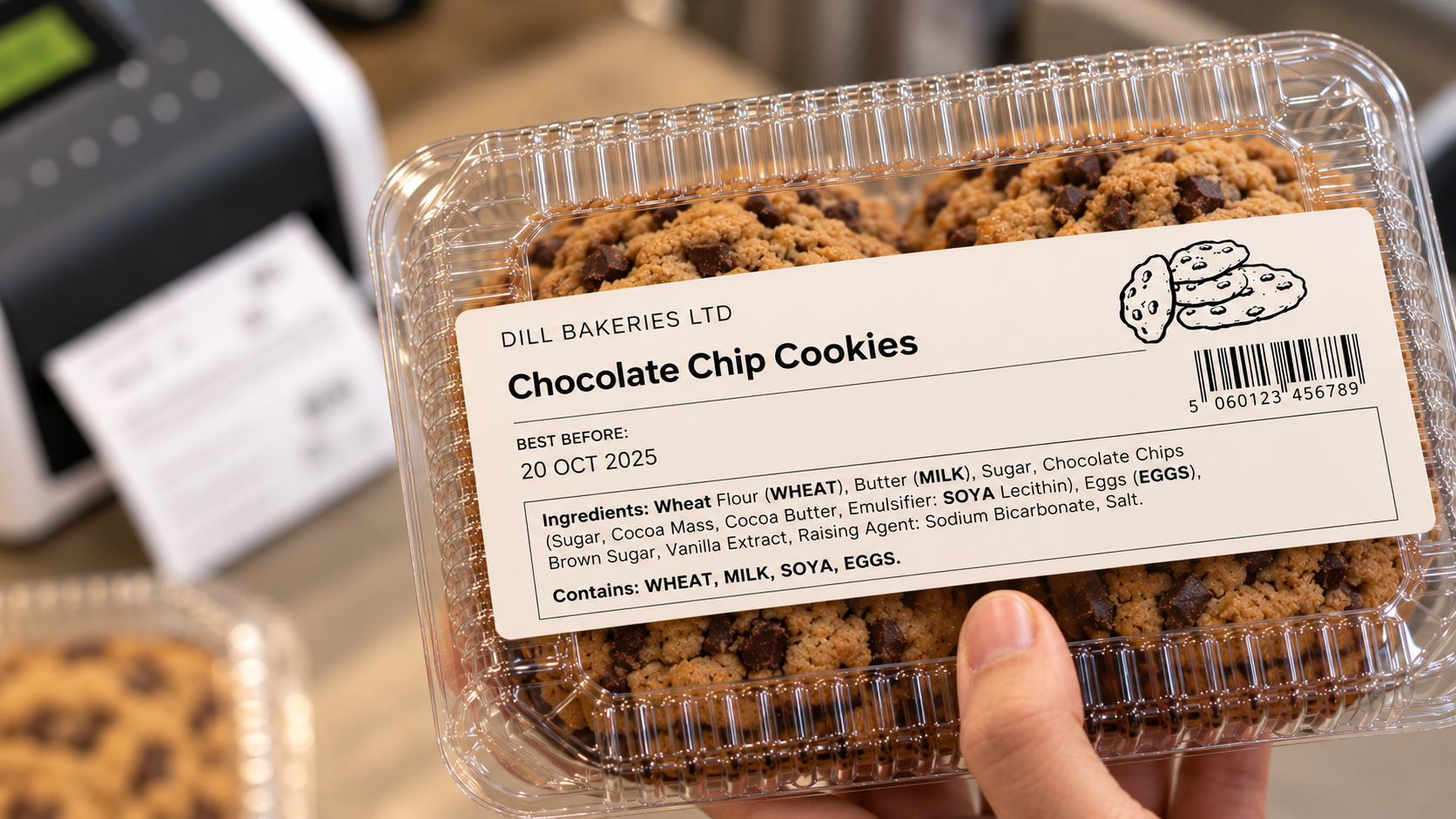
- A good label carries the name, prep date and time, use-by date, who made it, and allergens. Decanted ingredients also need their ingredients list and the original date mark.
- Printed labels remove the mental maths, the handwriting and the missing allergen line.
What a stock rotation label is
It's the sticker on a tub, tray or bag that tells anyone on shift what the food is, when it was made, opened, decanted or frozen, when it must be used or thrown away, what's in it and who made it. People also call them food rotation labels, kitchen date labels or prep labels. The job is the same: make it obvious which item goes first and which goes in the bin.
Is date-labelling prepped food a legal requirement?
Honest answer: not in those words. Here's how the pieces actually fit.
What the law says. The core hygiene rules for food businesses cover storage, protecting food from contamination and keeping the cold chain intact (Regulation 852/2004, Annex II, Chapter IX). None of that text says "put a date label on your prepped food". What the law does require is that food businesses put in place and maintain permanent procedures based on HACCP principles (Regulation 852/2004, Article 5). In most kitchens, shelf life is one of the things those procedures end up covering.
On top of that, in England the Food Safety and Hygiene (England) Regulations 2013 make it an offence to keep food that is likely to support the growth of harmful bacteria above 8°C, with some exceptions and a defence for food on service or display for under 4 hours. Keeping cooked food hot below 63°C is also an offence, with a similar defence for under 2 hours on service or display (Schedule 4). And, as SFBB puts it, it is against the law to serve food after its use-by date.
What the FSA recommends. The SFBB chilled storage pack tells caterers to use stickers or another labelling method so staff can track when homemade food should be used or thrown away (SFBB: Chilled storage and display). That's guidance, not statute.
Our reading. Put together, a kitchen has a legal duty to run HACCP-based procedures and not to serve out-of-date food, and no practical way to show it is doing either without some kind of date mark. That's our interpretation, not a quote from the regulations. It's why date labels are the normal way UK kitchens prove control, even though no single rule orders them.
So "a legal requirement" overstates it, and "optional" understates it.
What to put on a stock rotation label
SFBB's stock control pack gives the baseline for decanted food: note the name, ingredients and use-by or best-before date. For frozen food, you need a system that shows the date it was frozen (SFBB: Stock control).
FSA allergen guidance adds that ingredients should be kept in their original or labelled containers, and ingredients and prepared food stored separately in closed, labelled containers.
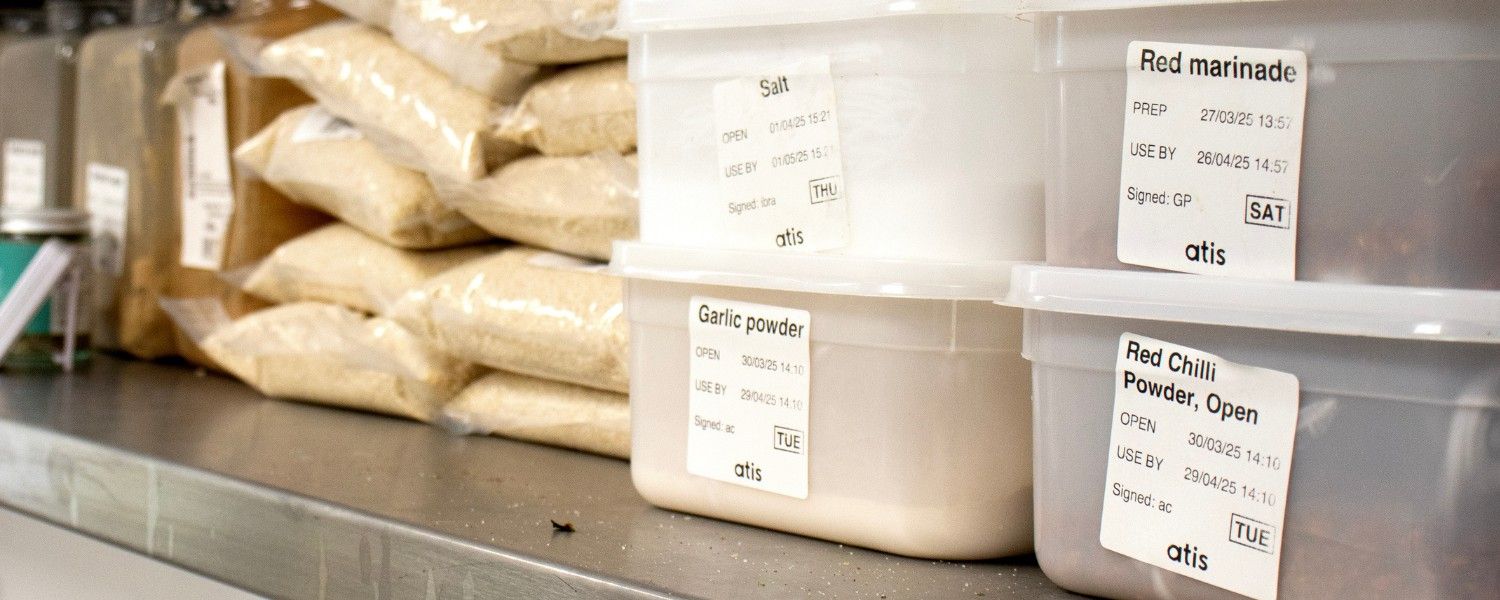
Good practice builds on that. A useful prep label has:
- Product name, as it appears on your menu or recipe.
- Prep date and time, or date opened, decanted or frozen.
- Use-by (for high-risk food) or best before (for dry goods), with a time if your kitchen runs to service.
- Initials of whoever made it, so questions have somewhere to go.
- Allergens, in capitals, so they jump off the label.
Here's a prepped item made on a Monday morning:
Coronation Chicken · PREP
Made: Mon 28/09 · 07:15
Use by: Wed 30/09 · end of service
By: JM · Contains: EGGS, MUSTARD, MILK
The maths: SFBB says day of cooking or opening + 2. Made Monday 28/09, so Monday counts, then Tuesday and Wednesday. Use by Wednesday 30/09. Thursday morning, it goes in the bin.
And here's a decanted ingredient:
Plain Flour · DECANTED
Ingredients: WHEAT flour, calcium carbonate, iron, niacin, thiamin
Best before: 14/03/2027 (from original pack)
Decanted: Mon 28/09 · By: SK
The best before comes from the manufacturer's pack, not the day you decanted it. Once the original bag is in the recycling, that sticker is the only allergen information left.
First in, first out
SFBB tells businesses to follow first in, first out (FIFO) and to train staff on it. It also says to do regular stock checks and throw away anything past its use-by date (SFBB: Stock control).
FIFO usually breaks when new deliveries go in front because that's where the gap is, or when two tubs of the same thing can't be compared at a glance. Put the use-by in the biggest type on the label and face it outwards.
Use-by vs best before in a kitchen
These two dates do different jobs:
- Use-by is about safety. Don't eat food after this date. In a kitchen, SFBB notes it's also a legal line: serving food past its use-by is against the law.
- Best before is about quality. Food can still be safe after it, though it may not be at its best.
For your own prep, anything high-risk and ready to eat (cooked meats, dressed salads, sauces with egg or dairy, cooked rice) should carry a use-by. Dry goods decanted from a manufacturer's pack usually keep the manufacturer's best before.
How long prepped food keeps
SFBB says high-risk ready-to-eat food should be kept for no more than 3 days: day of cooking or opening + 2, unless you have evidence it's safe for longer (SFBB: Chilled storage and display).
Temperature is the other half of shelf life:
- Law (England, Wales and Northern Ireland): chilled food must be kept at 8°C or below.
- Recommendation (Scotland): 8°C or below is recommended.
- SFBB recommendation: set fridges at 5°C or below, which gives you headroom when the door is opening all service.
A day + 2 label on food that's been sitting at 10°C doesn't mean much. Labels and fridge temperatures only work together.
What EHOs look for
Under the Food Hygiene Rating Scheme (England, Wales and Northern Ireland), inspectors assess three areas, according to the FSA's FHRS guidance for businesses. Here's how labels show up in each:
- How food is handled, including storage. Is prepped food dated? Is anything past its use-by? Is older stock in front? Are allergen ingredients in closed, labelled containers?
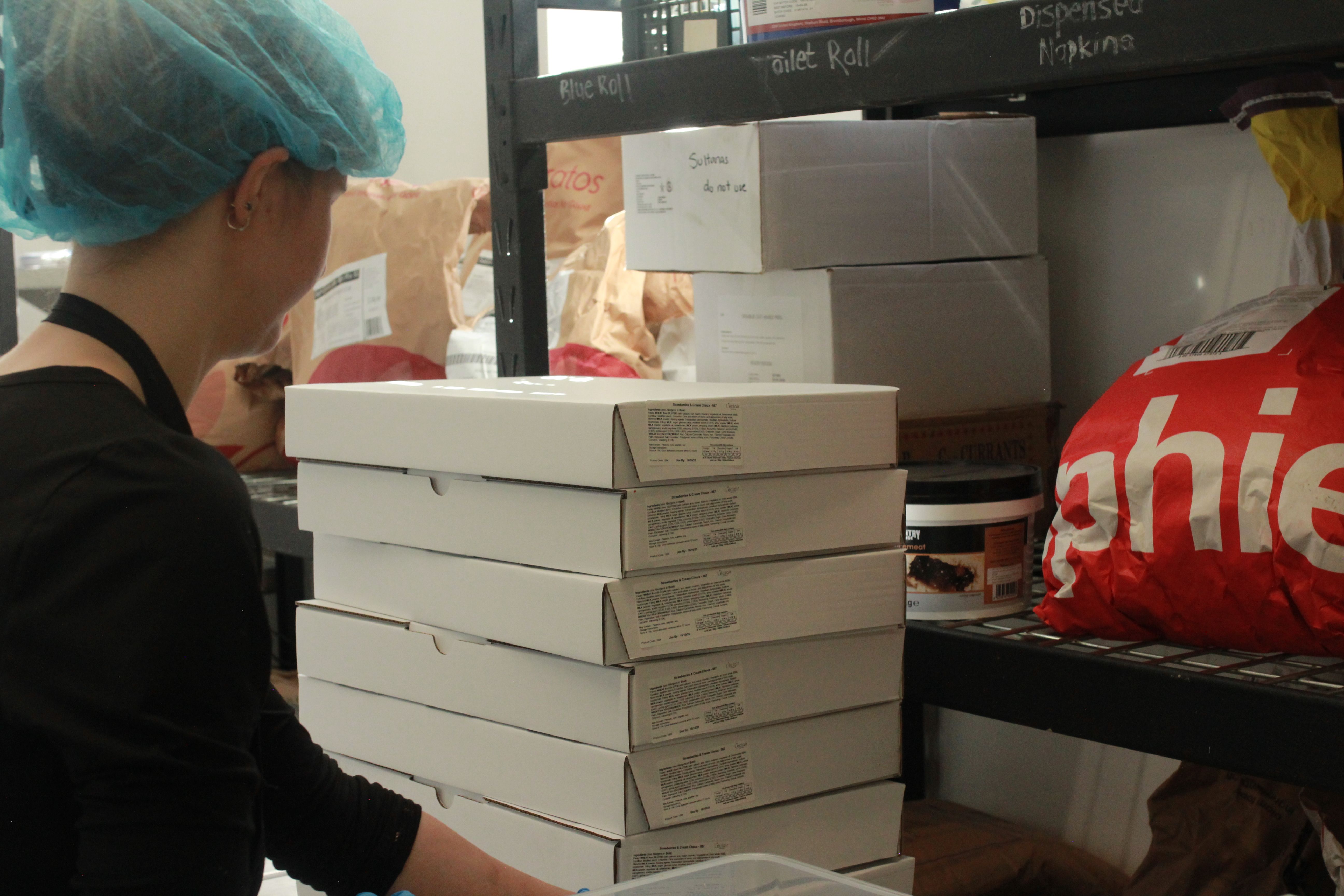
- Physical condition of the premises. Tidy, labelled shelves make it easier for an inspector to see that storage is under control. A walk-in full of unmarked tubs suggests the opposite.
- Food safety management. Do you have a documented process for shelf life? Are staff trained on it? Can the person on shift explain why that tub says Wednesday?
Labels are the visible evidence that your written procedure is followed on a Tuesday afternoon, not just when the manager is in.
Why handwritten labels and day dots fall short
Colour-coded day dots (one colour per day of the week) and handwritten masking tape are cheap and familiar. They also leave gaps:
- A colour isn't a date. A blue dot tells you Monday. It doesn't tell you which Monday.
- The maths is done in someone's head. Day + 2 across a weekend, at the end of a double shift, is where mistakes come from.
- Handwriting fades and smudges. Condensation in a walk-in is hard on marker pen.
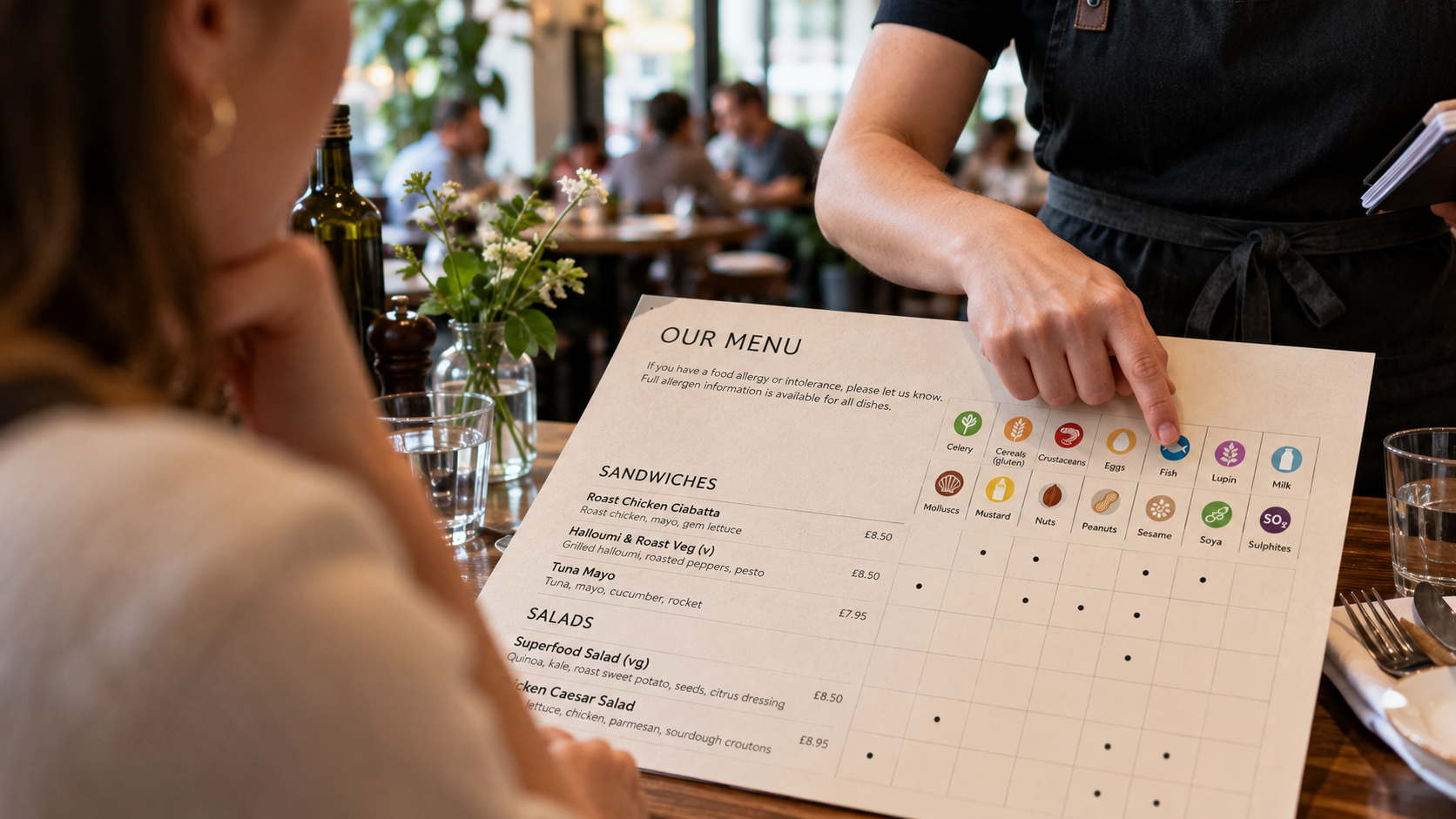
- Allergens get skipped. When a label is written by hand in a rush, the allergen line is usually the first thing to go.
- Every chef does it differently. "CC 28/9", "Cor. chick Mon" and "chicken mayo" might all be the same product.
None of this breaks a rule on its own. It just makes control harder to prove.
Printed labels and what a stock rotation label printer changes
A printed label takes the thinking out of the moment. Shelf life, allergens and product name are set once, by someone with time to check them. After that, the use-by is calculated rather than guessed, the allergen line is always there, and the name matches the recipe.
A label printer on its own is just a printer. What matters is where the product data lives, and whether it's the same data at every site.
A checklist for your kitchen
- Write down your shelf life for each prepped item. Default to day of cooking or opening + 2 for high-risk ready-to-eat food unless you have evidence for longer.
- Decide what goes on every label: name, prep date and time, use-by or best before, initials, allergens.
- Label decanted ingredients with name, ingredients and the original date mark.
- Mark frozen food with the date it was frozen.
- Set fridges to 5°C or below and check food stays at 8°C or below.
- Train every starter on FIFO and on reading your labels.
- Check stock daily and bin anything past its use-by.
How Dill handles it
With Dill, each recipe's ingredients, allergens and shelf life are set up once and stored together. When someone finishes a prep, they choose the item on a tablet or phone and the printer does the rest: prep date, use-by or discard date and time, their initials and the allergens, every time. Update a shelf life at head office and every site picks up the change.
Products come across from your POS or EPOS data (Clover, Lightspeed, EposNow, CyBake and PosHub), so nobody retypes the menu. The same system handles grab-and-go and made-to-order labels too, food to go allergen labelling included. It runs on Brother label printers, with other hardware on request, and hundreds of businesses, thousands of sites between them, already use it.
More on prep labelling with Dill, and on why allergen labels drift across multiple sites.
Label every tub the same way
If your walk-in looks like that Monday morning, we'll show you what it looks like with every tub labelled the same way. Book a demo.
FAQ
Are stock rotation labels a legal requirement in the UK?
No statute says "date-label your prepped food" in those words. But the law requires food safety procedures based on HACCP principles and makes it illegal to serve food past its use-by date, and date labels are how most kitchens show they meet those duties.
What should a food rotation label include?
At minimum: product name, date made or opened, and the use-by or best-before date. Good practice adds the time, the initials of whoever made it, and the allergens. For decanted food, SFBB says to note name, ingredients and use-by or best before.
How long can I keep prepped food in the fridge?
SFBB recommends no more than 3 days for high-risk ready-to-eat food: day of cooking or opening + 2, unless you have evidence it's safe for longer. Made Monday, use by Wednesday.
What temperature should my kitchen fridge be?
SFBB recommends setting fridges at 5°C or below. In England, Wales and Northern Ireland, chilled food must legally be kept at 8°C or below. In Scotland, 8°C or below is recommended.
Is a best before date on prep food the same as a use-by?
No. Use-by is about safety and is a legal line: food shouldn't be served after it. Best before is about quality, and food can be safe after it. High-risk prep should carry a use-by.
Are day dots enough?
They can support a system, but a colour only tells you the day of the week, not the date, the use-by, who made it or what allergens are in it.